Free Photo Filters Online
Apply free photo filters online in a few clicks. Choose a black and white look for a portrait, a faded vintage tone for a travel shot, or a warm cast for something you want to feel nostalgic. Adjust the strength until it suits the picture, then download it with no watermark.

Drag or click to upload images to start editing.

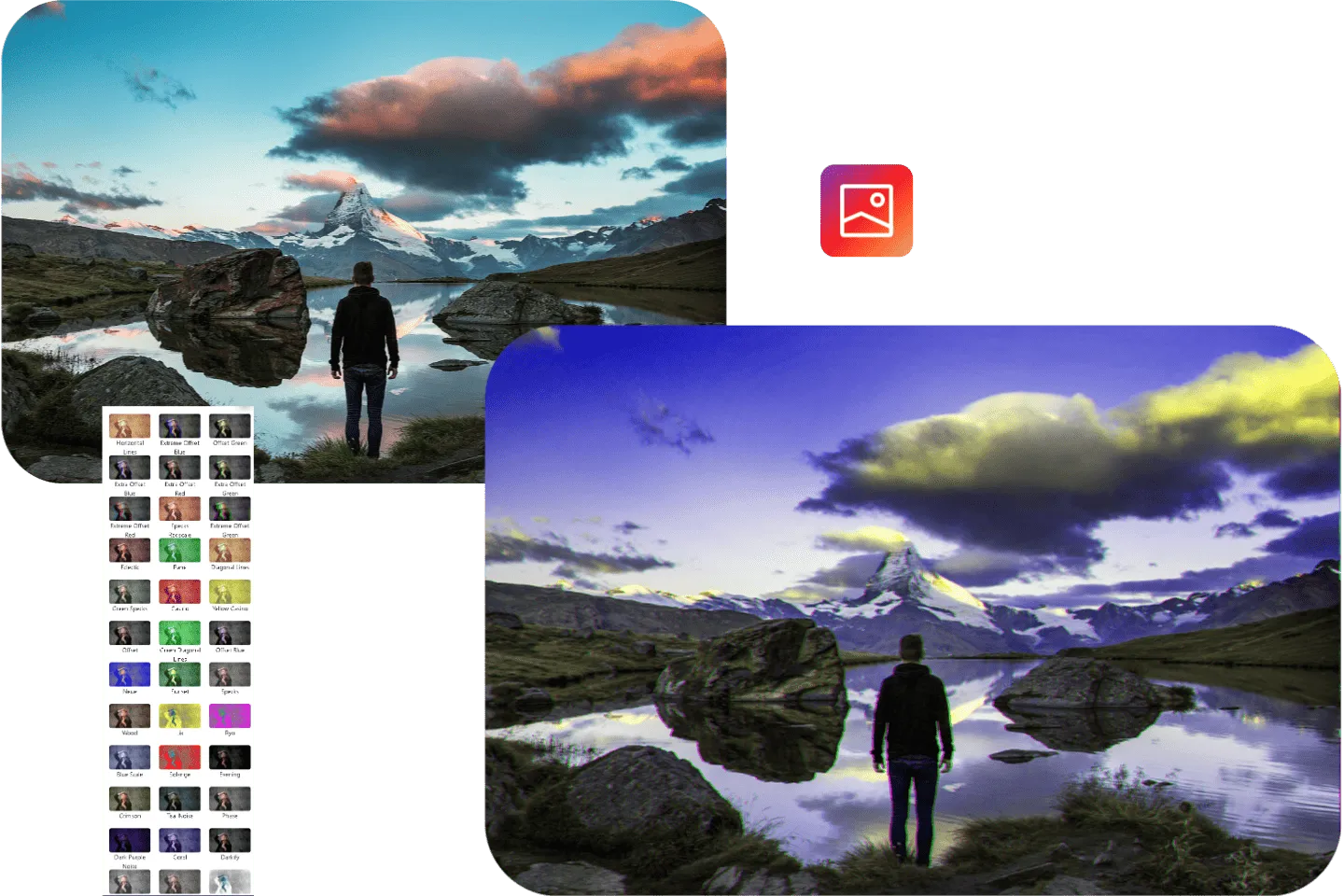
How to Apply Free Photo Filters Online
1. Upload your photo
Choose the image you want to edit and upload it to ArtsFlick's online photo editor. JPEG and PNG files are supported and no sign-up is required.
2. Select your uploaded photo
Make sure the uploaded image is selected on the canvas, so the filter you pick is applied to the right layer.
3. Open the Filters menu
Open the "Filters" or "Effects" tab in the editor to browse the available looks, grouped by the kind of change they make.
4. Apply a filter and set its strength
Click a filter to apply it, then adjust the strength until the photo still looks like your photo. Compare against the original before you move on.
5. Download your edited photo
Save the filtered image as PNG or JPEG. Check the export dimensions, name the file and open the saved image before sharing it.
Why Do People Choose ArtsFlick's Photo Filters?
A Filter for Each Kind of Change
The filters are grouped by what they actually do to a photo rather than by mood, which makes
it faster to find the one you want. Monochrome removes colour, vintage fades and warms,
analog adds grain and cast, and the corrective filters adjust brightness and contrast
without changing the character of the image.
Filters are one part of the editor rather than the whole of it. You can also
crop,
add text and
place shapes on the same canvas, so the
filter step fits into the edit instead of being a separate trip to another tool.
Free, With No Added Watermark
Every filter is free to use and ArtsFlick does not add its own logo or watermark to the export. Upload a photo, try a few looks side by side, and download the one that works. Any watermark already present in your source photo stays part of that photo.
Adjustable, Not All-Or-Nothing
A filter at full strength is rarely the best version of itself. Black and white draws attention to texture and composition because colour is no longer competing for it. A warm cast suggests time of day. Both work better dialled back far enough that the photo still reads as yours. Apply the filter, then move the strength slider down until you stop noticing the filter and start noticing the picture.
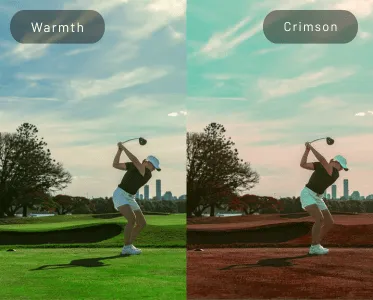
The Same Photo, Three Different Filters


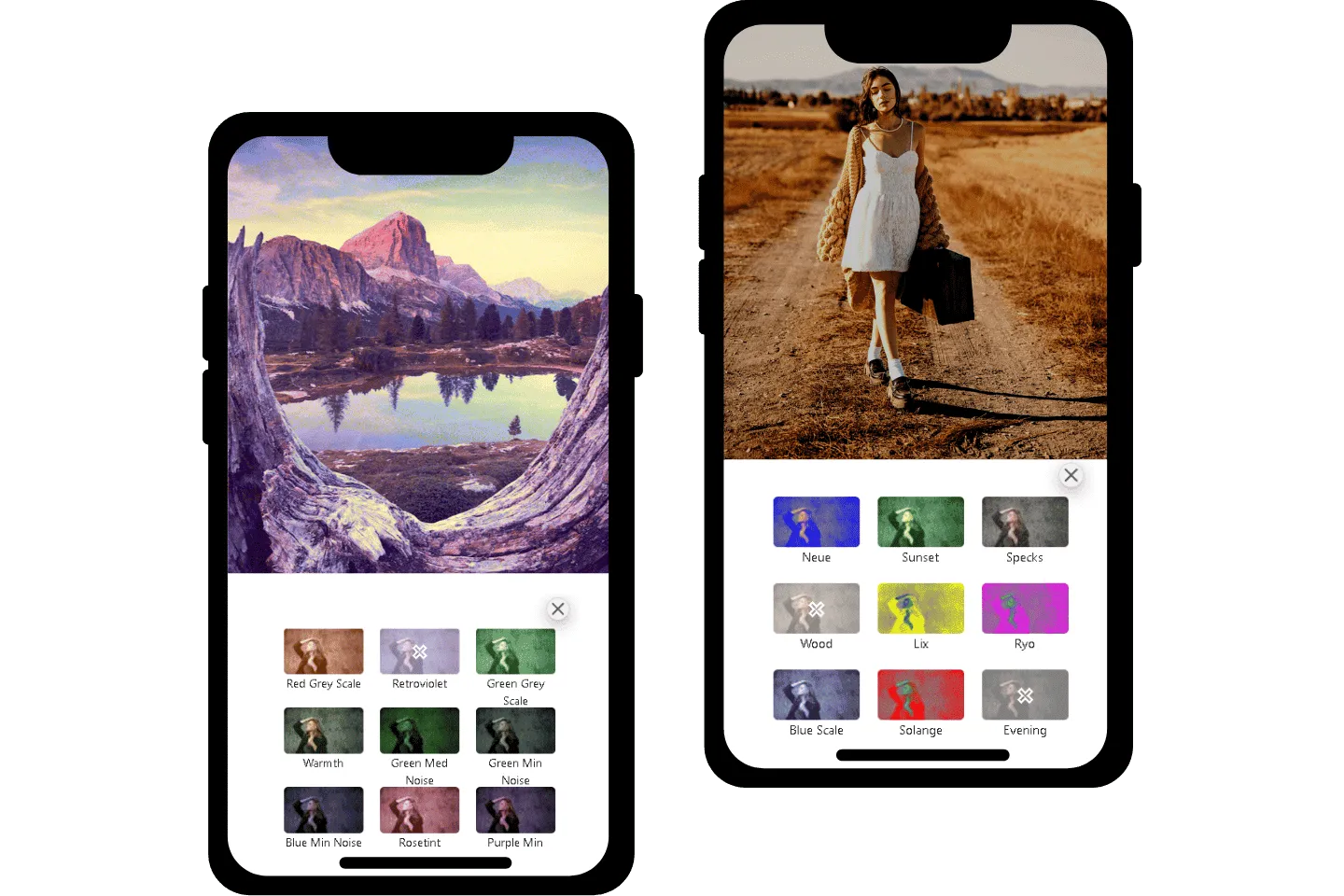
Easily Add Photo Filters on Mobile
The editor runs in a mobile browser, so there is no app to install and nothing to sign up for. Open ArtsFlick on your phone, upload a photo and the same filter library is there. One thing worth knowing: filter thumbnails are small on a phone screen and a subtle look is hard to judge at that size. Apply the filter and view it at full size before deciding, rather than picking from the thumbnail. You can add text and adjust lighting on the same screen.
The Free Photo Filter Families, and What Each One Does
Scrolling a long list of filter names is slow, because the name rarely tells you what the filter will do. These are the families the library is built from. Find the family that matches the change you want, then try the looks inside it.
Monochrome
Removes colour entirely. Useful when colour is distracting rather than helping: busy backgrounds, mixed lighting, or a portrait where you want attention on the face. Contrast matters more once colour is gone.
Vintage and faded
Lifts the blacks so shadows sit grey rather than true black, and pulls saturation down. Reads as older film. Good on travel and lifestyle shots, poor on anything that needs to look crisp and current, such as a product listing.
Warm
Pushes colour toward orange and red. Suggests late afternoon, indoor light or nostalgia. Flattering on skin tones, which is why it suits portraits, and misleading on food or products where colour accuracy matters.
Cool
Pushes toward blue and teal. Reads as early morning, winter or something clinical and calm. Works with water, glass, metal and overcast skies. Tends to make skin look pale, so use it carefully on people.
Analog and grain
Adds texture and a slight colour cast, imitating film stock. Grain hides minor noise and softens over-sharpened digital edges, so it can rescue a photo shot at high ISO. Our guide to making photos look like film covers this in detail.
Bold and experimental
Strong colour shifts, channel swaps and glitch effects, including looks like Redscale and Retroviolet. Deliberately unsubtle. Best used on one image as a statement rather than across a whole set.
Corrective
Brightness and contrast adjustments that change the exposure without imposing a style. Start here if the photo is simply too dark or too flat. Often a corrective filter is all a photo needed and no stylistic filter is required at all.
Aesthetic tones
Soft pastel and muted palettes built for a consistent social feed. Their value is repeatability: applying the same one across a set of photos makes them look like they belong together.
Where they overlap
Families are a starting point, not strict categories. A vintage look is usually warm as well as faded, and an analog look often includes both. Pick by the change you want most, then adjust the strength.
| If the photo is | Try | Why |
|---|---|---|
| A portrait in mixed light | Monochrome | Removes the colour casts that mixed lighting creates, so skin no longer shifts between warm and green across the face. |
| A travel or street shot | Vintage and faded | Lifted blacks suggest a photo taken some time ago, which suits a scene more than it suits a person. |
| Shot at high ISO and noisy | Analog and grain | Deliberate grain reads as intentional texture, where digital noise reads as a mistake. |
| Too dark or too flat | Corrective | Fix the exposure before reaching for a style. A stylistic filter over an underexposed photo usually makes it worse. |
| A product or food photo | Corrective only | Colour accuracy is the point. Warm and vintage filters misrepresent what the buyer will receive, and some marketplaces reject heavily filtered listings. See our guide to product image requirements. |
| One post in a themed feed | Aesthetic tones | Apply the same filter at the same strength across the set so the grid reads as one body of work. |
| A single statement image | Bold and experimental | Strong looks lose impact through repetition. Use one, not a series. |

Black and White Filter
ArtsFlick turns your photos into timeless black and white visuals. When color is removed, the viewer naturally focuses on emotion, composition and lighting. This simple shift creates bold, memorable images that stand out with clarity and depth.

Eclectic Filter
Create a bold and original photo style using ArtsFlick’s eclectic filter. Whether you're building an aesthetic Instagram feed or expressing your creativity, this unique filter helps your pictures stand out with personality and flair. Try it now and make your edits unforgettable.
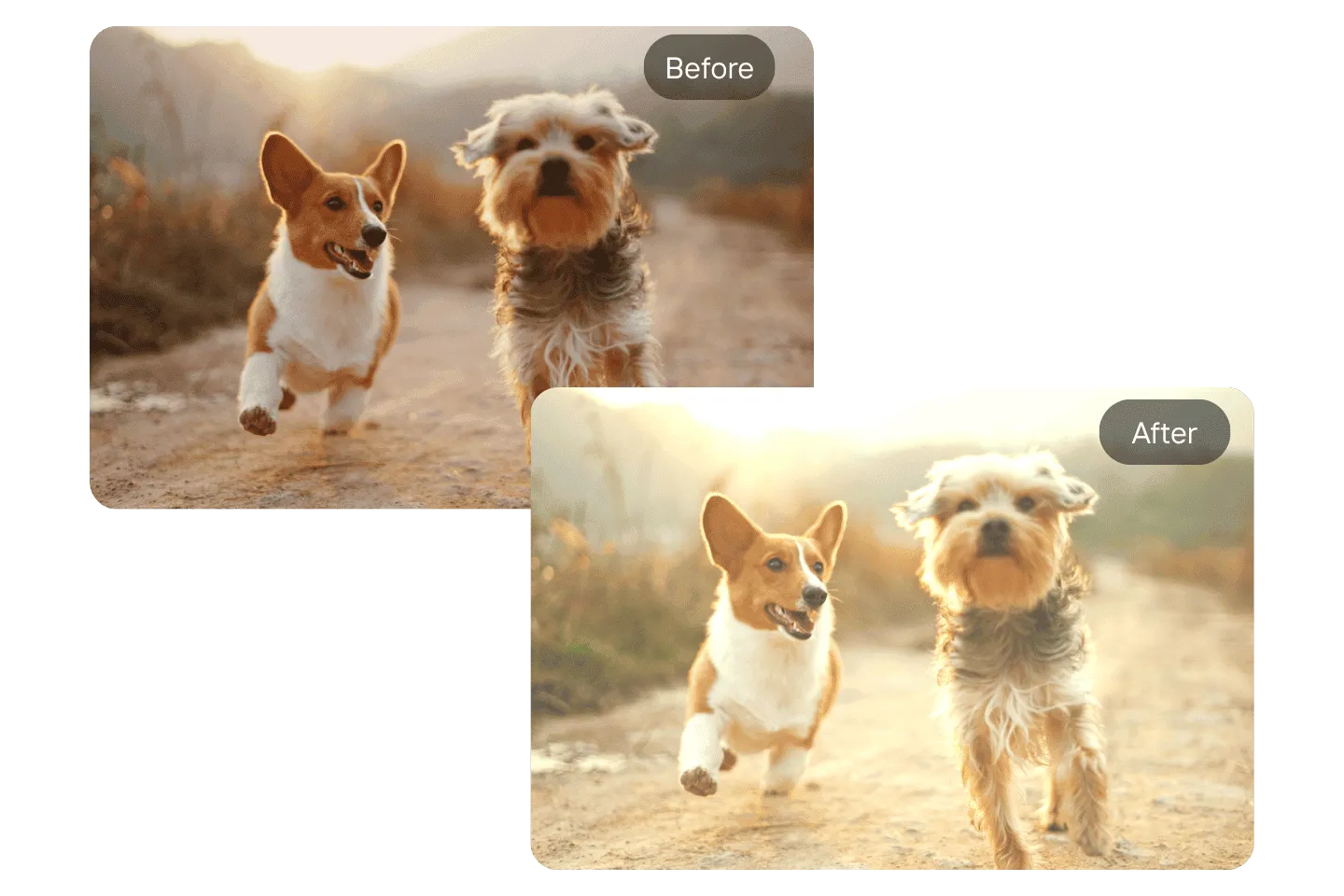
Brightness Filter
Enhance your photos instantly with ArtsFlick’s brightness filter. This tool adds a natural glow that brings out hidden details and highlights the beauty of your image. Brighter visuals capture attention and make your photos feel fresh and full of life.

Retroviolet Filter
Bring a nostalgic yet vibrant feel to your photos with the Retroviolet filter on ArtsFlick. This filter blends soft purples and muted tones to create a dreamy vintage aesthetic. Ideal for portraits, creative edits or social media posts that need a unique and emotional touch. Make your photos stand out with a retro vibe that speaks style.
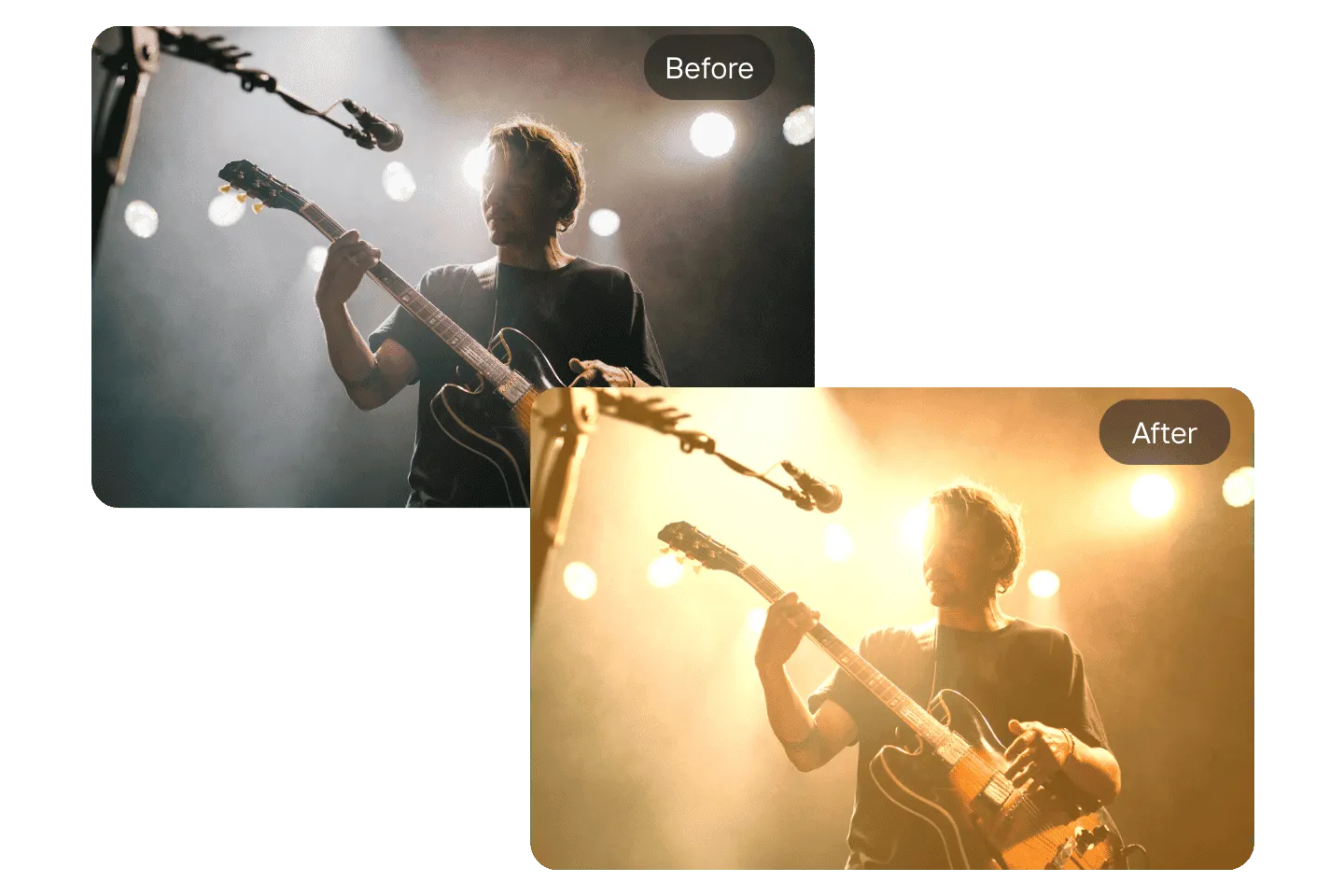
Vintage Filter
Give your photos a timeless look with ArtsFlick’s vintage filter. This effect softens colors and adds a nostalgic tone that transforms modern images into classic memories. Perfect for creating emotional depth, vintage filters help your photos stand out with a warm, old-school charm.
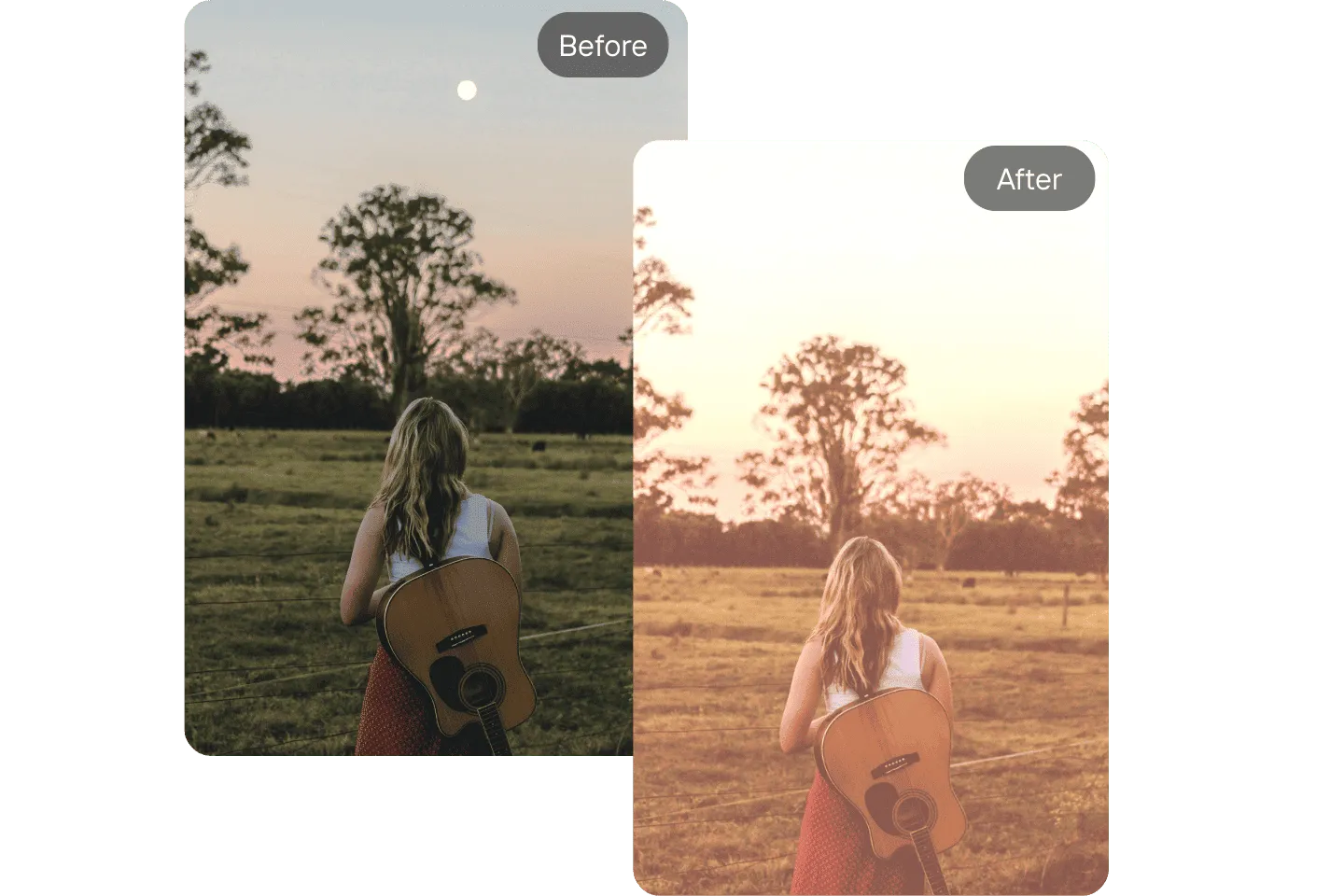
Apply Multiple Filters at Once with ArtsFlick
Filters stack, so you can combine a colour cast with grain, or a corrective brightness adjustment with a vintage tone. Two things are worth knowing before you do. The order matters: grain over a faded look reads differently from a faded look over grain. And strength compounds, so two filters at full strength usually overwhelm the photo rather than layering neatly. Lower each one when you combine them, and stop at two or three. Beyond that the original photo stops being visible underneath.
ArtsFlick Offers More Than Just Photo Filters
ArtsFlick is more than just a photo filter tool. You can retouch your images, adjust lighting and colors, add text and stickers, and design custom visuals like cards or invitations. With flexible editing features, you can explore endless ways to create stunning and personalized content directly in your browser.


Saving and Sharing a Filtered Photo
The filter is only half the result. How you export decides what anyone else actually sees.
PNG while you are still working, JPG to publish
PNG uses lossless compression, so re-saving does not degrade the image. That matters if you expect to come back and change the filter strength. JPG produces a much smaller file on a photographic image, which is what you want for upload, but every save re-compresses it. Our comparison of PNG, JPG and WebP covers the trade-off in more depth.
Grain and heavy texture cost file size
Analog and grain filters add fine random detail across the whole frame, which is exactly what JPEG compresses least efficiently. A grainy export can be noticeably larger than the same photo with a smooth filter. If the file needs to stay small, either lower the grain or accept a slightly lower quality setting. Our guide to compressing images for the web covers sensible targets.
Export at the size the platform uses
Social platforms resize and recompress what you upload. A subtle filter can survive that pass poorly, with banding appearing in smooth gradients like skies. Exporting close to the platform's display dimensions reduces how much reprocessing happens. Our guide to Instagram post sizes lists the dimensions worth targeting.
Check the export, not the preview
The editor preview is rendered on your screen at screen resolution. The downloaded file is the real output. Open it at full size before you post, particularly after a strong filter or a stack of two, because that is where compression artefacts show first.
Photo Filter Frequently Asked Questions
What is the Redscale filter?
How do I apply photo filters to my images online?
Do photo filters reduce image quality?
Can I apply more than one filter to the same photo?
Are the photo filters free, and will there be a watermark?
Can I use photo filters on my phone?
Start With One Photo
Pick a photo you already like and try one filter from each family on it. Comparing the same image across monochrome, vintage, warm and analog tells you more in two minutes than reading filter names ever will, because the right filter depends on the photo rather than on the filter.